Wallpaper is one of the fastest ways to change the character of a room, but with hundreds of patterns and textures to choose from, it's easy to pick something that looks great in a sample book and completely wrong on your wall.
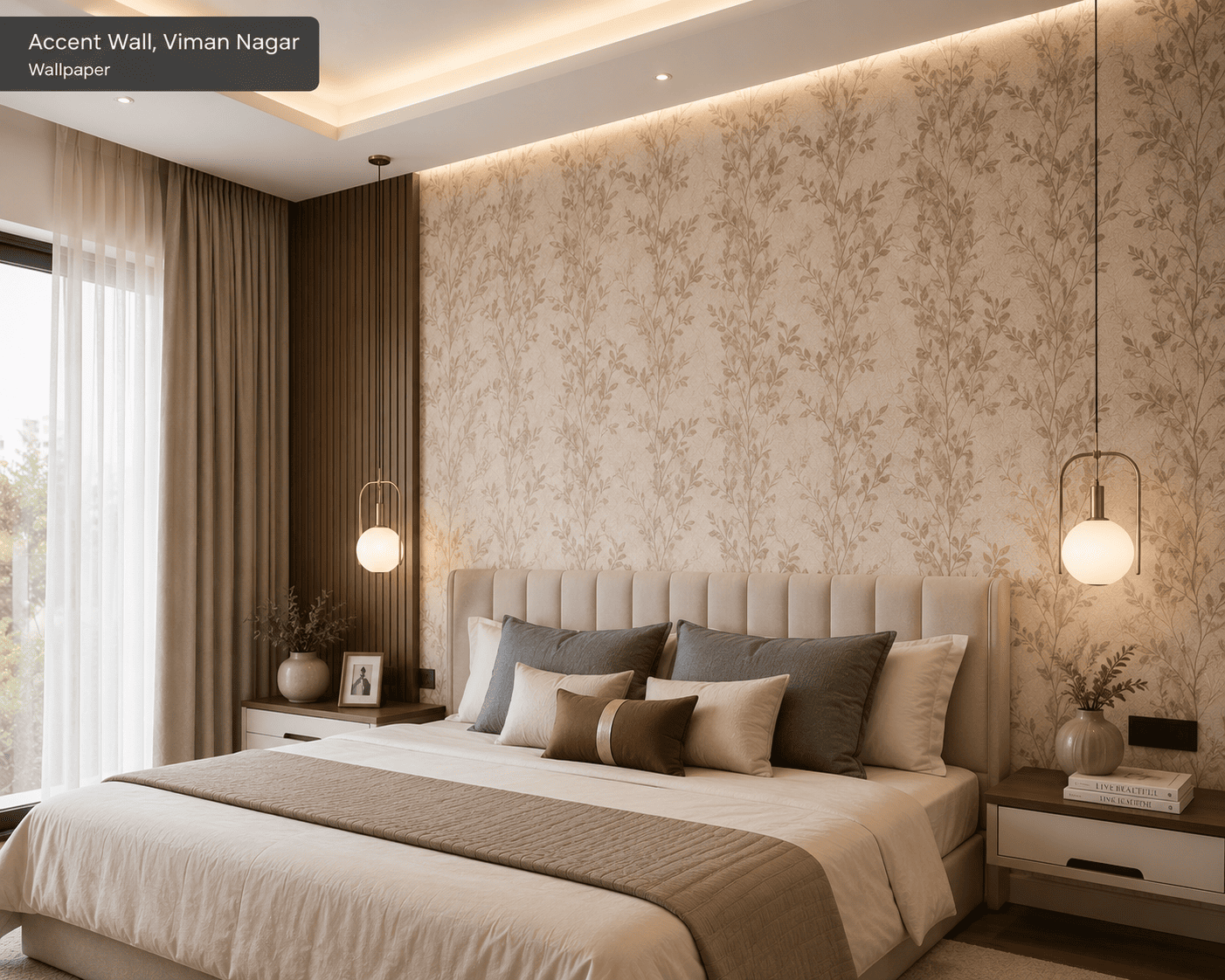
Start with the room's purpose. Bedrooms can carry softer, more textured patterns since they're viewed at rest and in low light, while a living room accent wall can take a bolder print since it's seen from a distance and in brighter light.
Consider scale before pattern. In smaller rooms, a large, busy print can make the walls feel like they're closing in — a subtle texture or a smaller repeat usually reads better in compact spaces.
One feature wall is often more effective than papering an entire room. It draws the eye, adds depth, and is considerably easier to update later if your taste changes.
Don't skip the surface prep. A wallpaper is only as good as the wall beneath it — proper priming and levelling is what keeps seams invisible and prevents peeling months down the line.
Finally, think about lighting. Metallic and textured wallpapers behave very differently under warm versus cool lighting, so it's worth checking a sample on your actual wall, at the time of day you'll see it most.